Understanding Redirect Chains.
The page you expect is not always the page you reach.
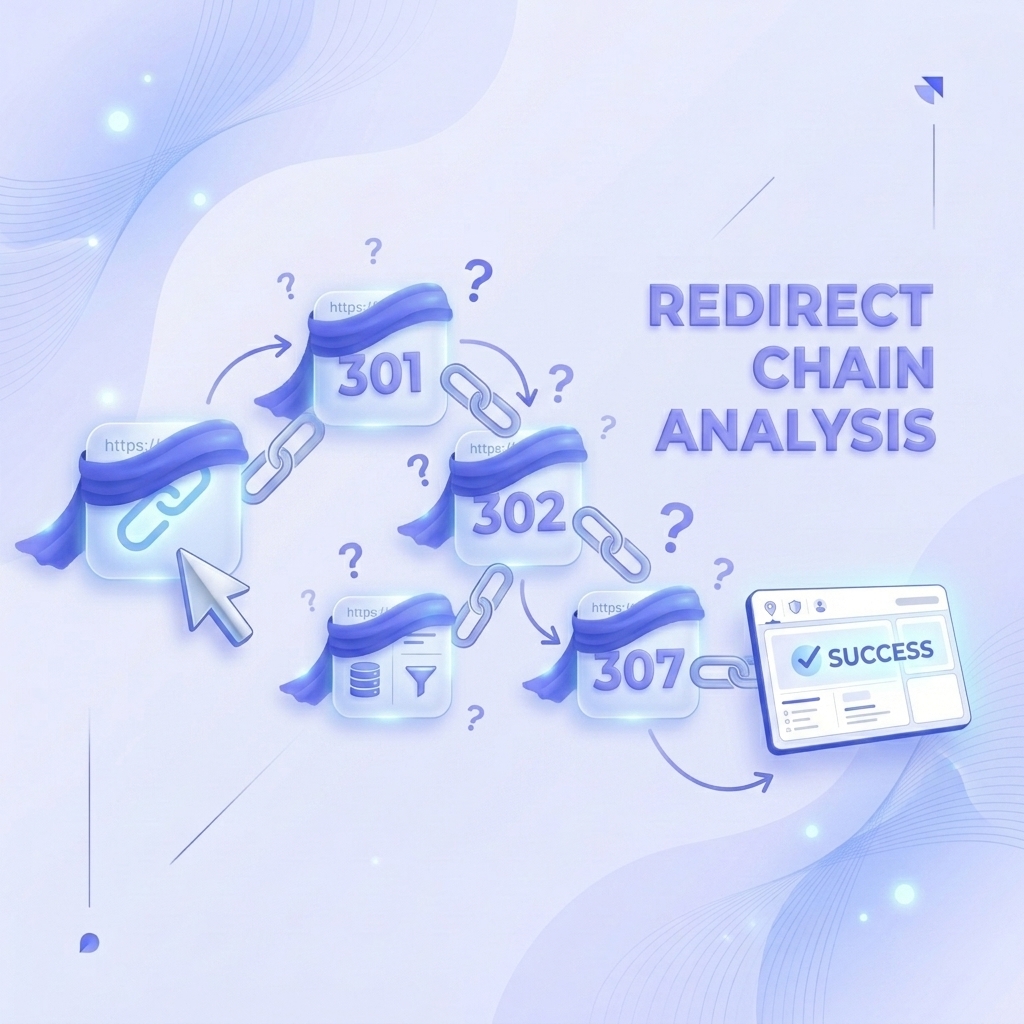
When you click a link, it feels simple: you tap and a page opens. Behind the scenes, that click may travel through several websites before reaching its final destination.
Open the app
Try the idea in VennURL.
Paste a URL into VennURL to inspect the destination, review redirects, check connection details, and understand what deserves attention before opening. VennURL is built around a simple principle: understand first, then act.
01
Journey
A useful signal only when it is explained in context.
02
Destination
A useful signal only when it is explained in context.
03
Visibility
A useful signal only when it is explained in context.
Every Click Is a Journey.
This sequence is called a redirect chain. Most people never notice it because it happens in fractions of a second.
Understanding redirect chains can tell you a surprising amount about where you are actually going and whether the journey deserves trust.
What Is a Redirect?
The page you are looking for is not here anymore. Go over there instead.
A redirect is a simple instruction from one web server to your browser. Your browser receives the instruction and automatically loads the next address.
https://example.com

https://www.example.com
Why Redirects Exist.
Redirects are one of the internet's oldest and most useful tools. They help when pages move, domains change, companies rebrand, users sign in, payments are processed, and marketing campaigns are tracked.
Like a sign at an old office address, a redirect tells visitors where to go next.
One Redirect Is Normal.
Many legitimate websites use a single redirect to improve consistency or security.
example.com

www.example.com

http://example.com

https://example.com
Multiple Redirects Tell a Bigger Story.
Sometimes a link travels through several destinations before arriving at the final website. Every step may have a legitimate reason, or it may not. Without visibility, you do not know.
bit.ly

marketing.example.com

tracking.example.net

login.example.com

app.example.com
Why Redirect Chains Matter.
Each additional redirect introduces another decision made on your behalf. Sometimes that is reasonable. Sometimes it deserves a closer look.
A complicated route is not automatically risky, but it is harder to understand.
Redirects Can Hide the Final Destination.
This is one reason shortened links feel uncertain. A short link may lead to a familiar document, or it may lead somewhere entirely different.
Understanding the redirect chain is often more useful than looking only at the first URL.
bit.ly/abc123

https://docs.google.com
Marketing Is Not Always the Destination.
Many companies use redirects for analytics. Those redirects can record which campaign generated a click, which email was opened, or which advertisement performed best.
These redirects are common and often harmless. The important thing is knowing they are there.
newsletter.example.com

campaign.example.com

shop.example.com
Redirects and Security.
Redirects themselves are not dangerous. But they can make it harder to understand where a link actually goes.
If all you saw was the shortened URL, you would not know the final destination until your browser arrived there.
tinyurl.com

random-domain.com

login-security-update.net
Redirect Chains Can Change Over Time.
A link that pointed somewhere expected yesterday could point somewhere different tomorrow. Domains change ownership, pages move, websites shut down, and configurations change.
That is why regularly checking important links can be valuable.
Fewer Redirects Usually Mean Greater Clarity.
A direct journey is easier to understand. A longer route may still be legitimate, but it gives you more to review.
example.com

dashboard.example.com

bit.ly

tracking.example.net

campaign.example.org

redirect.example.co

dashboard.example.com
Redirect Chains and Trust.
Trust grows when people know what to expect. Every unexpected redirect introduces another unknown.
- Why did the destination change?
- Why are there so many steps?
- Who controls each website?
- Was I supposed to end up here?
How VennURL Explains Redirect Chains.
Rather than simply telling you that redirects exist, VennURL shows the journey. It highlights how many redirects occurred, whether the domain changed, where the journey ended, whether HTTPS remained enabled, and whether anything deserves closer attention.
Instead of hiding the route, VennURL makes it visible.
Original URL

bit.ly/abc123

marketing.example.com

login.example.com

Final Destination

app.example.com
Before You Click.
- Where does this link actually end?
- How many redirects happen before I get there?
- Does the destination match what I expected?
- Is the redirect chain reasonable?
- Has anything changed along the way?
Final Thought.
Redirects are one of the invisible systems that keep the web running. Most are helpful. Some are necessary. A few deserve closer attention.
The important thing is not avoiding redirects. It is understanding them.
Understanding comes before action.
VennURL helps people review destinations, context, and warning signs before deciding what to do next.
Related reading
Keep building context with these VennURL notes.
June 20, 2026
Why website age is not everything
An older domain can be reassuring, but domain age should never be the only reason you trust a website.
June 20, 2026
The difference between HTTPS and trust
HTTPS protects your connection. Trust depends on the context that helps you decide whether to connect in the first place.
June 20, 2026
What happens when you click a shortened link?
Shortened links are forwarding addresses. Learn how redirects, hidden destinations, and tracking shape what happens after the click.
Continue the Conversation
Follow VennURL for more thoughts on URL intelligence, web trust, and building a calmer internet.